Svejest 42 Journal
The Home Is Never Silent: Why Acoustic Comfort Is About More Than Turning Down the Noise
We carefully design the lighting, colours, and textures of our homes. But when it comes to sound, our only strategy is usually trying to block it out. New research suggests it might be time to start designing our domestic soundscapes.
We spend hours deliberating over the colour temperature of our lightbulbs. We carefully arrange furniture to optimise physical flow, and we agonise over the exact shade of paint that will make a living room feel both energetic and calm. Yet, when it comes to the sensory experience of our homes, we largely leave one critical dimension to chance: sound.
For decades, residential acoustic design has operated on a simple premise: noise is bad, and silence is the goal. We install double glazing to block out traffic, buy thicker rugs to muffle footsteps, and seek out appliances with the lowest possible decibel ratings. But a growing body of environmental psychology and acoustic research is challenging this subtractive approach. What if a healthy, restorative home isn't an acoustic vacuum? What if acoustic comfort is about deliberately designing the sounds we want to hear, rather than just eliminating the ones we don't?
The Hidden Pulse of the Room
The idea that sound shapes our physiological state is not new, but the tools we use to measure it are evolving. An exploratory laboratory experiment published in November 2026 in the journal Buildings (new tab) investigated how different indoor soundscapes affect the human body. Researchers observed 30 healthy young adults as they listened to three-minute recordings of birdsong, a flowing stream, urban traffic, and construction activity.
Rather than relying solely on subjective questionnaires or strapping the participants into electrocardiograms, the researchers used a contactless assessment approach. By analysing high-resolution facial video, they used remote photoplethysmography (rPPG) to track minute colour fluctuations in the skin, deriving pulse-related measures without touching the subjects.
The results were statistically clear. The natural recordings were associated with a lower mean heart rate—67.5 beats per minute during birdsong and 68.4 during the stream—compared with 77.2 for traffic and a stressful 82.4 during construction noise. Heart rate variability (specifically the RMSSD metric, which correlates with parasympathetic nervous system activity) was also higher during the natural soundscapes, suggesting a more relaxed physiological state.
However, before we assume that playing a Spotify forest playlist is a medical intervention, we have to look closer. The researchers openly acknowledge a major confounding variable: the sound identity was inextricably linked to its intensity. The natural recordings were played at a moderate 51.5 to 54.2 dB(A), while the traffic and construction noises blared at a highly intrusive 73.8 to 76.4 dB(A). It is impossible to say whether the participants were relaxed by the biological meaning of the birdsong, or simply relieved by the relative quiet.
Furthermore, the researchers reported changes in the LF/HF ratio, a metric traditionally thought to measure sympathetic versus parasympathetic balance. However, as methodological experts have long cautioned (new tab) , the LF/HF ratio is influenced by multiple physiological processes and should not be treated as a simple, direct read-out of the body's "stress vs. rest" switch.
Beyond "Natural" Audio
If the laboratory shows us that loud mechanical noise is stressful and quiet nature is relaxing, does that mean every modern home needs a digital waterfall? Not necessarily.
An extensive systematic review and meta-analysis published in October 2026 (new tab) looked at 194 studies of urban soundscapes and well-being. By pooling data from 66 of those studies (yielding 1,658 effect sizes), the researchers found a moderate positive association between natural sounds and human health, producing a pooled effect size of Hedges' g = 0.59.
Crucially, this review noted that the benefits of pleasant soundscapes appeared much larger when they were compared to noise rather than when they were compared to silence. This implies that some of the "therapeutic" benefit of nature sounds is actually just the relief of having a noxious baseline masked or removed.
A subsequent expert review in npj Acoustics (new tab) goes even further, arguing that the label "natural" is insufficient. A sound's ability to restore our mental energy depends heavily on its complexity, our familiarity with it, and its perceived meaning. Imposing the sound of a dense rainforest into a sealed, minimalist apartment on the 14th floor might feel incongruous, artificial, or even intrusive. Visual fit matters. A nature recording that matches a green view from a window is psychologically coherent; the same recording played over the hum of a refrigerator is just added noise.
The Architecture of Acoustic Control
When we transition from the laboratory to the living room, context and control become the dominant factors in acoustic comfort. Real homes are not static environments where we sit in noise-cancelling headphones for three minutes at a time. They are dynamic spaces where multiple activities—concentrated work, cooking, conversation, and sleep—happen simultaneously.
A fascinating survey of 464 London home workers (new tab) illustrates this perfectly. The study found that natural sounds and self-selected music were strongly associated with greater acoustic comfort. Conversely, neighbour noise, crowding, and intrusive household sounds were recurring sources of distress.
The operative word here is self-selected. Control is a massive psychological buffer. The sound of a television is pleasant when you are the one watching it; it is an infuriating pollutant when it leaks through the ceiling from the apartment above. The London research also highlighted the sheer architectural value of having a room facing a quiet side of the building—a feature associated with greater comfort for both work and relaxation.
The European Baseline: We Still Need to Turn Down the Volume
Embracing positive soundscape design does not let us off the hook for building quieter cities. The European context makes this urgently clear. According to the European Environment Agency (new tab) , just over 110 million people—more than 20% of Europeans—are exposed to transport noise levels above EU reporting thresholds. If we apply the stricter recommendations of the World Health Organisation, that number leaps to approximately 150 million.
Road traffic remains the dominant source, and progress toward the EU's 2030 noise-reduction objective remains frustratingly slow. Against this backdrop of chronic population exposure, simply playing louder birdsong over the roar of a motorway is not an evidence-based substitute for better acoustic insulation, quieter infrastructure, or municipal source reduction.
Designing for the Ear
So, how do we practically apply soundscape research to modern living? It requires a shift from asking "Is my home quiet?" to asking "Does my home sound right for what I am doing?"
- Audit by Activity: Recognise that different tasks require different acoustic conditions. The gentle background hum of a radio might aid routine tasks like cooking but shatter the concentration required for deep work.
- Reduce Before Adding: Address intrusive sources before trying to mask them with pleasant sounds. Fix rattling equipment, turn off unnecessary digital alerts, mitigate television spill between rooms, and pursue building remedies for persistent external noise.
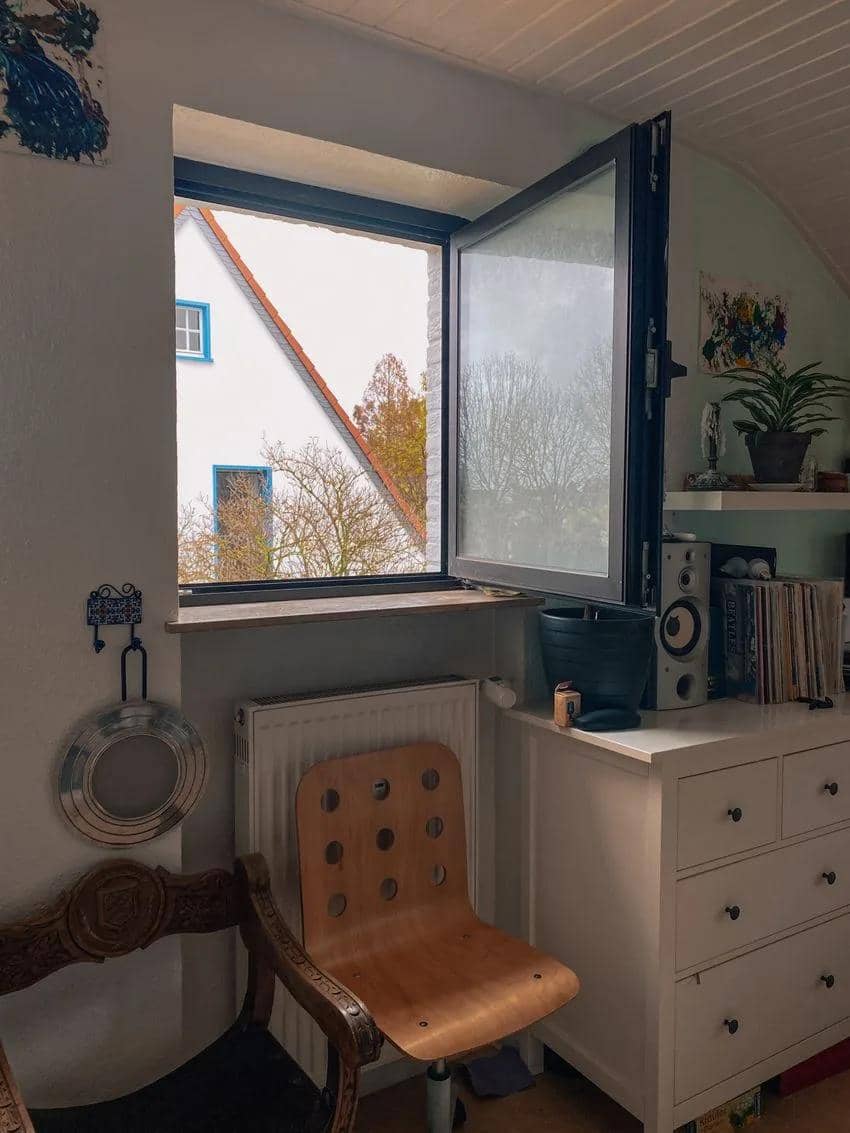
- Seek Visual and Acoustic Fit: If you introduce natural audio or water features, consider the context. Real birds outside a vegetated balcony or water sounds linked to a visible source feel coherent and restorative.
- Negotiate Household Dynamics: A good residential soundscape is highly individual. One person's comforting background music is another person's sensory overload. Use the quieter-facing side of the dwelling for those who are highly noise-sensitive or need to sleep.
The home is never truly silent, and perhaps it shouldn't be. By understanding that our ears crave context, meaning, and control just as much as they crave quiet, we can begin to design homes that don't just protect us from the noise of the world, but actively sound like sanctuary.
Sources and Further Reading
- Lu, S.; Wang, T.; Yang, Y. (2026). Occupant Physiological Responses to Indoor Soundscapes: A Contactless Assessment Approach Using Remote Photoplethysmography (new tab) . Buildings, 16(22), 4620.
- Guo, X. et al. (2026). Beyond Noise and Silence: Urban Soundscapes and Their Contribution to Human Well-Being—A Systematic Review and Meta-Analysis (new tab) . npj Urban Sustainability, 6, 130.
- Zhang, Y.; Kang, J. (2026). Restorative Urban Soundscapes (new tab) . npj Acoustics, 2, 44.
- Torresin, S. et al. (2021). Indoor Soundscapes at Home During the COVID-19 Lockdown in London – Part II: A Structural Equation Model for Comfort, Content, and Well-Being (new tab) . Applied Acoustics, 185, 108379.
- European Environment Agency. (2025). More Than 20% of Europeans Exposed to Harmful Noise Pollution Levels (new tab) .
- Billman, G. E. (2013). The LF/HF Ratio Does Not Accurately Measure Cardiac Sympatho-Vagal Balance (new tab) . Frontiers in Physiology.
 SpotlessGiG