Svejest 42 Journal
When Green Electricity Feels Free: The Solar-and-Battery Rebound at Home
Do rooftop solar panels simply make our homes cleaner and cheaper, or does the feeling of energy abundance encourage us to consume more? The answer is reshaping the grid.
When Green Electricity Feels Free: The Solar-and-Battery Rebound at Home
For decades, environmental awareness at home meant one thing: turning things off. We were taught to switch off the lights, wash clothes on cold, and view electricity as a scarce resource with a carbon cost. But what happens to human behaviour when a house suddenly generates its own zero-carbon electricity, storing the excess in a battery for later?
Very quickly, electricity begins to feel free.
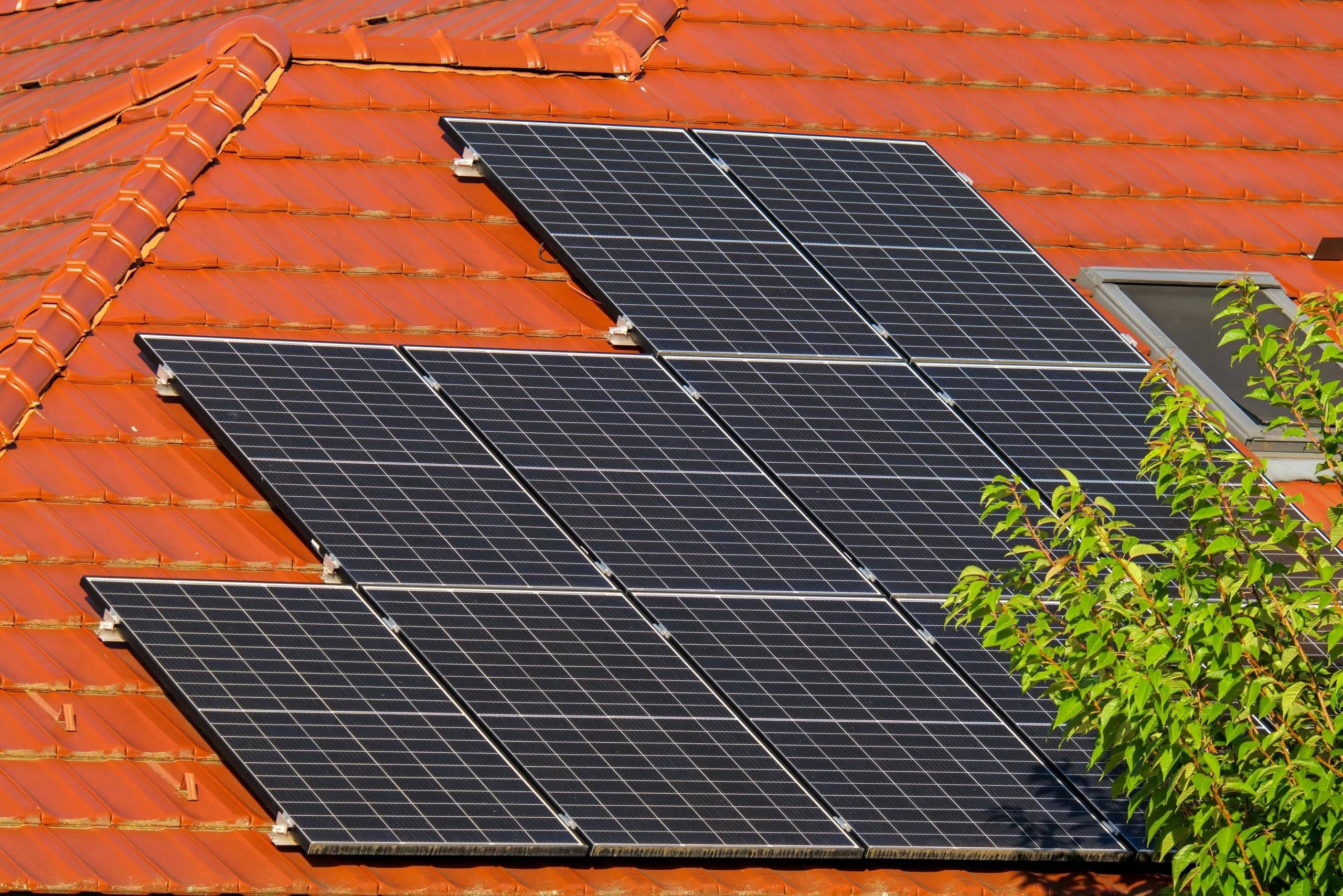
This psychological and infrastructural transition is currently reshaping neighborhoods across the globe. As solar photovoltaics supplied 13% of EU gross electricity output in 2025 (new tab) , with the European Union's battery fleet reaching 77.3 GWh following 27.1 GWh of new installations (new tab) , the smart home is no longer just a private retreat. It has become a miniature power plant. And according to recent behavioural and energy-system research, this new era of abundance is triggering a measurable "rebound effect."
This is not a story about abandoning solar power. Rather, it explores a subtler behavioural transition: domestic energy is moving from something households have been taught to conserve toward something that periodically feels limitless. And as millions of households become "prosumers," the way we handle this newfound abundance will dictate the future of our energy infrastructure.
The Efficiency Paradox: Who Rebounds the Most?
When something becomes cheaper or more efficient, we tend to use more of it. In energy economics, this is known as the rebound effect. Until recently, it was difficult to quantify exactly how much extra electricity households use once they install solar panels, largely because "free" self-generated solar electricity is rarely metered the same way as grid imports.
However, a comprehensive 2026 German longitudinal study published in the Journal of Industrial Ecology (new tab) provides striking clarity. By combining data from the German Socio-Economic Panel (2011–2021) with an independent 2024 survey of photovoltaic (PV) owners and machine-learning consumption reconstruction, researchers Stefan Poier and Michael Bucksteeg found a central generation-based rebound estimate of 20.1%.
In practical terms, for every 10 kilowatt-hours (kWh) of electricity a residential PV system generates, about 2 kWh translates into additional household consumption.
Perhaps counterintuitively, this rebound was not driven by historically wasteful households. It was the low-consuming, comparatively efficient households that responded most strongly. More-efficient homes showed an estimated rebound of about 21.6%, compared to just 12.9% among less-efficient households. When environmentally conscious families finally gain access to near-zero-marginal-cost solar power, they feel comfortable relaxing their stringent conservation habits.
Living in a World of Plenty
What does this relaxed behaviour look like in daily life? Qualitative evidence from a 35-household living lab in Australia (new tab) offers a fascinating glimpse. The researchers followed early-adopter households—some equipped with large batteries and electric vehicles—and discovered a profound psychological shift.
According to Dr. Stephen Snow and his colleagues at the CSIRO, some owners of large batteries described electricity as effectively abundant. They reported abandoning habits like line-drying clothes (new tab) or meticulously tracking appliance efficiency. Instead, they used energy to drastically improve their comfort.
"It's made us more wasteful," one participant noted, though researchers point out this isn't necessarily a bad thing. Higher electricity use can represent improved thermal comfort, safer indoor temperatures during heatwaves, or cleaner electric cooking. The challenge, as energy-efficiency analyst Alan Pears observes in related reporting by Renew Economy (new tab) , is that messaging centered on "bountiful" electricity may produce higher grid peaks if the batteries run out when the sun goes down.
The Battery Paradox: Private Savings vs. Public Emissions
Home batteries are often viewed as inherently green, but they introduce their own paradox. A 2026 study in Operations Research (new tab) analysing German households found that residential storage actually increased total household electricity demand due to battery losses and behavioural changes.
Remarkably, under the specific grid conditions studied, the authors estimated a marginal emissions increase of 57 kilograms of CO2 per year for every kilowatt-hour of battery capacity. Why? Because a battery can cause a household to consume more power overall while primarily optimising for private financial savings rather than carbon reduction.
However, there is a crucial caveat: the same authors concluded that batteries can reduce emissions where solar penetration is sufficiently high. The environmental impact of a home battery depends entirely on when it charges, when it discharges, and the underlying local generation mix.
The 300-Terawatt-Hour Question: Europe's Grid Conundrum
When you multiply this household rebound across an entire continent, the numbers become staggering. A European energy-system model published in Nature Energy (new tab) applied these empirically observed rebound rates to 34 European electricity-market areas.
Depending on the magnitude and timing of the rebound, the researchers project up to 63–315 TWh of additional annual European electricity demand by 2050. This represents up to a 5.1% increase above the modelled baseline.
The Nature Energy authors stress that the sheer volume of extra electricity matters far less than when it is used. If additional consumption aligns with sunny hours, it can actually absorb otherwise-curtailed renewable electricity—acting like a sponge for excess power. In fact, the model found that renewable curtailment could fall by as much as 13.8% in some rebound scenarios.
But if that extra consumption is spread into winter evenings—when solar panels are dormant—the system requires drastically more wind generation, storage, hydrogen, gas backup, and network capacity. In high-rebound scenarios, this could add €72.3–82.9 billion in cumulative system costs by 2050.
From Private Savings to Public Assets
The emerging policy question is not whether households should avoid solar or batteries, but how smart software and grid incentives can preserve the benefits of clean energy without shifting demand into expensive, carbon-intensive hours.
Europe is already moving to address this. On November 2, 2026, Dutch grid operators announced they would begin paying participating energy suppliers (new tab) to make remotely controlled home batteries, heat pumps, and EV chargers available during congested evening periods. As Gilbert de Graaf, director of market services at Dutch grid operator Liander, emphasized, batteries responding solely to national wholesale prices can accidentally charge at times when a local neighborhood network is already congested. By offering availability payments, the grid operators are treating home batteries as controllable public assets rather than just private bill-saving devices.
Simultaneously, the private sector is racing to build the necessary hardware and software. On November 3, 2026, Octopus Energy, CATL, and Ampace signed a memorandum of understanding (new tab) to explore combining advanced home batteries with smart tariffs and virtual-power-plant capabilities across Europe.
Practical Implications for the Smart Home
If you live in a solar-and-battery home, or plan to invest in one, the era of energy abundance requires a new operating logic:
- Adopt a temporal mindset, not an ascetic one: You don't necessarily need to use less energy, but you do need to use it at the right time. Run flexible appliances (dishwashers, washing machines, EV chargers) during high local renewable generation.
- Look beyond the electricity bill: Readers with solar should compare their total household consumption before and after installation, rather than relying solely on reduced grid imports, to understand their true energy footprint.
- Democratize the smart home: The Australian living lab research highlighted that operational knowledge of batteries and virtual power plants is often concentrated in just one family member. Households should decide collectively who understands and can override the energy-management system.
- Demand smarter tech: Prospective buyers should scrutinize interoperability, automation settings, and dynamic-tariff integrations—not just headline storage capacity. A battery's true value lies in how intuitively it talks to the grid.
Ultimately, a zero-carbon home isn't one that simply turns off the lights. It's one that intelligently dances with the sun, the wind, and the grid—using energy joyfully when it is abundant, and conserving it respectfully when it is scarce.
Sources and Further Reading
- Here comes the sun: investigating the solar rebound effect and consumption behavior in photovoltaic households (new tab) – Journal of Industrial Ecology (2026)
- Implications of the solar rebound effect for the European energy transition (new tab) – Nature Energy (2026)
- Residential Battery Storage—Reshaping the Way We Do Electricity (new tab) – Operations Research (2026)
- Insights from an Australian Energy Living Lab: Understanding household energy use in transition (new tab) – Monash University and RACE for 2030
- Energy habits in a world of plenty (new tab) – CSIRO National Energy Analysis Centre
- It's made us more wasteful: Solar and battery homes plug in to a new age of abundant energy (new tab) – Renew Economy
- Solar energy (new tab) – European Commission
- New report: EU installs 27.1 GWh of new batteries in 2025 (new tab) – SolarPower Europe
- Dutch grid operators to offer compensation for home batteries that ease evening peaks (new tab) – NL Times
- Octopus Energy, battery giant CATL and Ampace team up to develop the next generation of smart home batteries (new tab) – Octopus Energy
 SpotlessGiG