Svejest 42 Journal
When the Smart Home Becomes an Audience: Are Safety Sensors Teaching Older People to Perform Independence?
Monitoring technology is supposed to passively observe daily life. But recent research reveals it often quietly rewrites it.
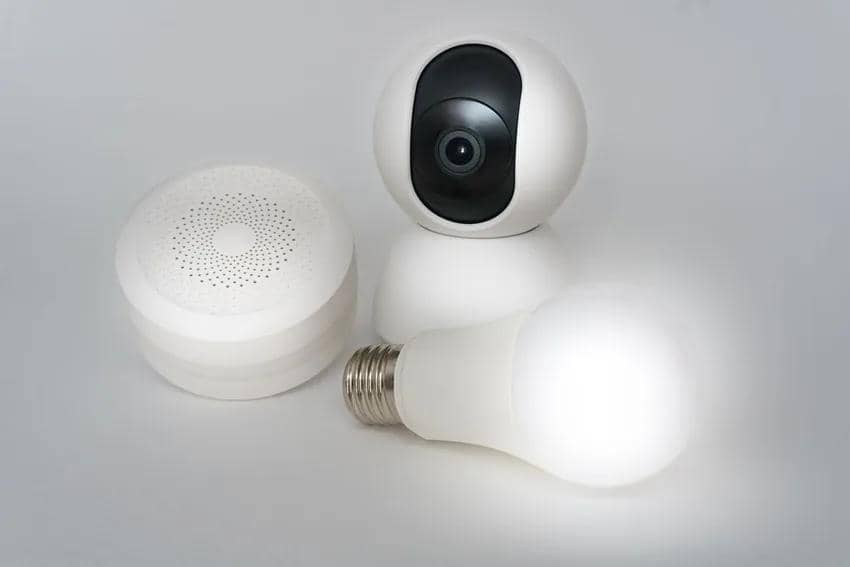
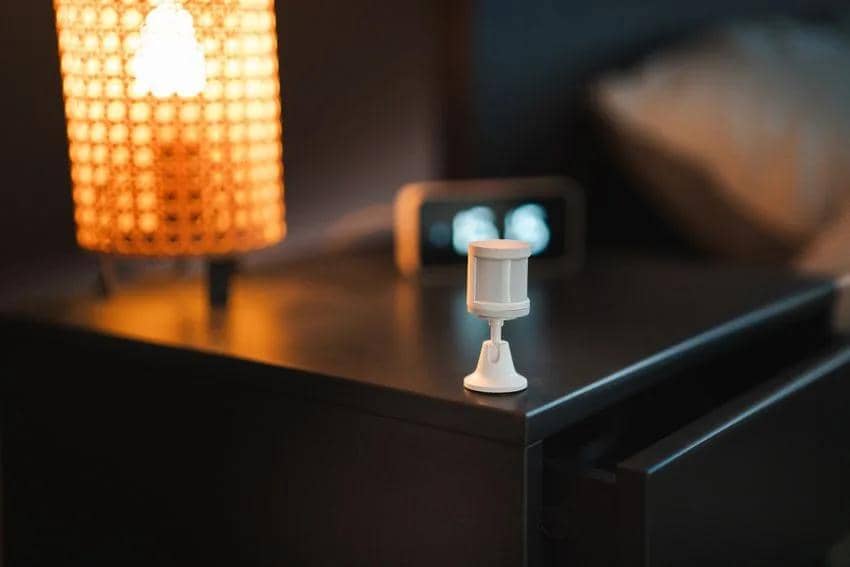
Imagine waking up at 3:00 AM to get a glass of water. For most of us, it’s a mundane, barely conscious action. But imagine knowing that your mattress has just logged your absence, a motion sensor has tracked your path to the kitchen, and if you take too long to return, an alert will be sent to your daughter's smartphone across the country.
Suddenly, the home is no longer a private sanctuary. It is an audience.
As populations age, technology is increasingly stepping in to bridge the gap between our desire to live independently and the practical realities of doing so. According to Eurostat demographics (new tab) , Europe is now home to 99 million people aged 65 or older. With professional homecare reaching only 28.3% of households (new tab) that report long-term care needs, connected safety systems—smart mattresses, fall detectors, and ambient sensors—are positioned as essential tools for ageing in place.
The public debate around these technologies usually centres on a simple tradeoff: privacy versus safety. But recent behavioural science reveals a far more complex dynamic. A monitored home doesn’t just observe domestic life; it quietly reshapes it. When older adults know their home is generating data for their caregivers, many begin to anticipate what those sensors will infer, and they actively modify their routines to curate the digital image of their independence.
The Observer Effect in the Living Room
A fascinating longitudinal study published in npj Health Systems (new tab) followed older adults living with comprehensive smart monitoring systems in a Chinese housing complex for 15 months. The researchers found that residents did not passively accept surveillance. Instead, they engaged in "visibility management"—the deliberate effort to shape what the system, and their distant relatives, could see about them.
The researchers identified three distinct ways residents altered their lives in response to the technology:
1. Reactance: The most direct response to unwanted surveillance was physical resistance. Residents simply unplugged or abandoned devices. When smart mattresses triggered false alarms to adult children after ordinary movements or bathroom trips, participants disconnected them. The nuisance of the alert outweighed the promise of safety.
2. Preemptive Behaviour: More subtle was the way the home dictated new routines. To avoid triggering smoke alarms from cooking steam—which could panic relatives living elsewhere—residents began cooking at lower heat, activating range hoods earlier than necessary, or even physically moving detectors away from kitchens. They adapted their ordinary lives to satisfy the sensitivities of the sensors, ironically risking a weakening of the system’s ability to detect genuine hazards.
3. Performative Compliance: Perhaps the most profound finding was that residents manipulated their data to manage their family's emotional state. One participant intentionally maintained data collection to prove to his children that he had slept well. Another deliberately withheld insomnia data to avoid causing worry. In both cases, the older adults weren't using the system merely for health tracking; they were using it to perform a reassuring version of daily life.
The Politics of the Administrator Account
This behaviour highlights a critical tension: monitoring affects family power dynamics as much as individual privacy. A separate 2026 study by the University of Washington (new tab) examined how older adults and their support networks negotiate always-on home technology.
The researchers discovered that control of a smart home often remains with whoever purchased and configured the device. When adult children hold the administrative accounts, the passwords, and the technical knowledge, older residents are left dependent on their families for even minor configuration changes.
The study found that older adults generally accept family awareness, but they resist unilateral family control. They want standing in the care relationship. A family member's ability to know that a parent is safe should not automatically grant them the power to change thermostats, watch indoor video feeds, or contact emergency services without permission.
The Case for the Sensors
It would be a mistake to conclude that monitoring technology is inherently coercive or universally harmful. In fact, under the right conditions, it provides immense value.
A 2026 systematic review in the Australasian Journal on Ageing (new tab) analysed 30 studies across 10 countries, finding that smart-home technology can meaningfully improve safety, support chronic-disease management, detect early signs of physical deterioration, and provide vital caregiver reassurance.
Furthermore, the primary longitudinal study noted that when residents face acute health risks, their perception of the technology shifts. In moments of real vulnerability, the system is viewed less as an intrusive observer and more as a crucial form of insurance.
The editorial challenge, then, is not to discard the technology, but to distinguish healthy implementation from systems that motivate behaviour mainly through the avoidance of nuisance alerts or family intervention.
A Blueprint for the Autonomy-Preserving Smart Home
If we want technology that genuinely supports independent living, we must change how these systems are implemented. Based on the recent research, families and designers should consider a new set of ground rules:
- Alert the Resident First: Systems should notify the older adult first when circumstances allow. If they do not respond, the alert escalates to relatives. This preserves the resident's agency and prevents unnecessary family panic over a burnt piece of toast.
- Democratize the Data: A monitoring system feels much more empowering when the resident can actually use it. When smartphones allow older adults to access their own sleep scores and health metrics, the technology transforms from a surveillance tool into a personal resource.
- Negotiate, Don't Impose: Families should treat monitoring as an ongoing agreement, not a one-time installation. The monitored person must know exactly which devices are present, what data is collected, and who receives it.
- Listen to "Noncompliance": Unplugging or selectively using a device should not be dismissed as irrational stubbornness. Often, it is highly rational feedback about discomfort, mismatched design, or the emotional burden of false alarms.
As technology becomes deeply embedded in the architecture of everyday life, we must remember that a home is more than a safe enclosure. It is a psychological space where autonomy is practiced daily. If our safety nets require older adults to constantly worry about what their sensors will report, we aren't helping them live independently—we are simply teaching them to perform it.
Sources and Further Reading
- Renegotiating autonomy and safety: disentangling tensions emerging for older adults living with smart monitoring systems (new tab) (npj Health Systems, 2026)
- Negotiating Autonomy, Control, and Privacy in Always-On Home IoT Technology-Mediated Care Relationships with Older Adults (new tab) (Proceedings of the ACM, 2026)
- Smart Home Technologies for Ageing in Place: A Systematic Review of Health Outcomes, Independence, Healthcare Utilisation and Implementation Considerations (new tab) (Australasian Journal on Ageing, 2026)
- Demography of Europe – 2026 edition (new tab) (Eurostat)
- Living conditions in Europe – professional homecare (new tab) (Eurostat, 2026)
 SpotlessGiG