Svejest 42 Journal
The Case for a Useful Mess: Why the Best-Run Homes Aren’t Always Tidy
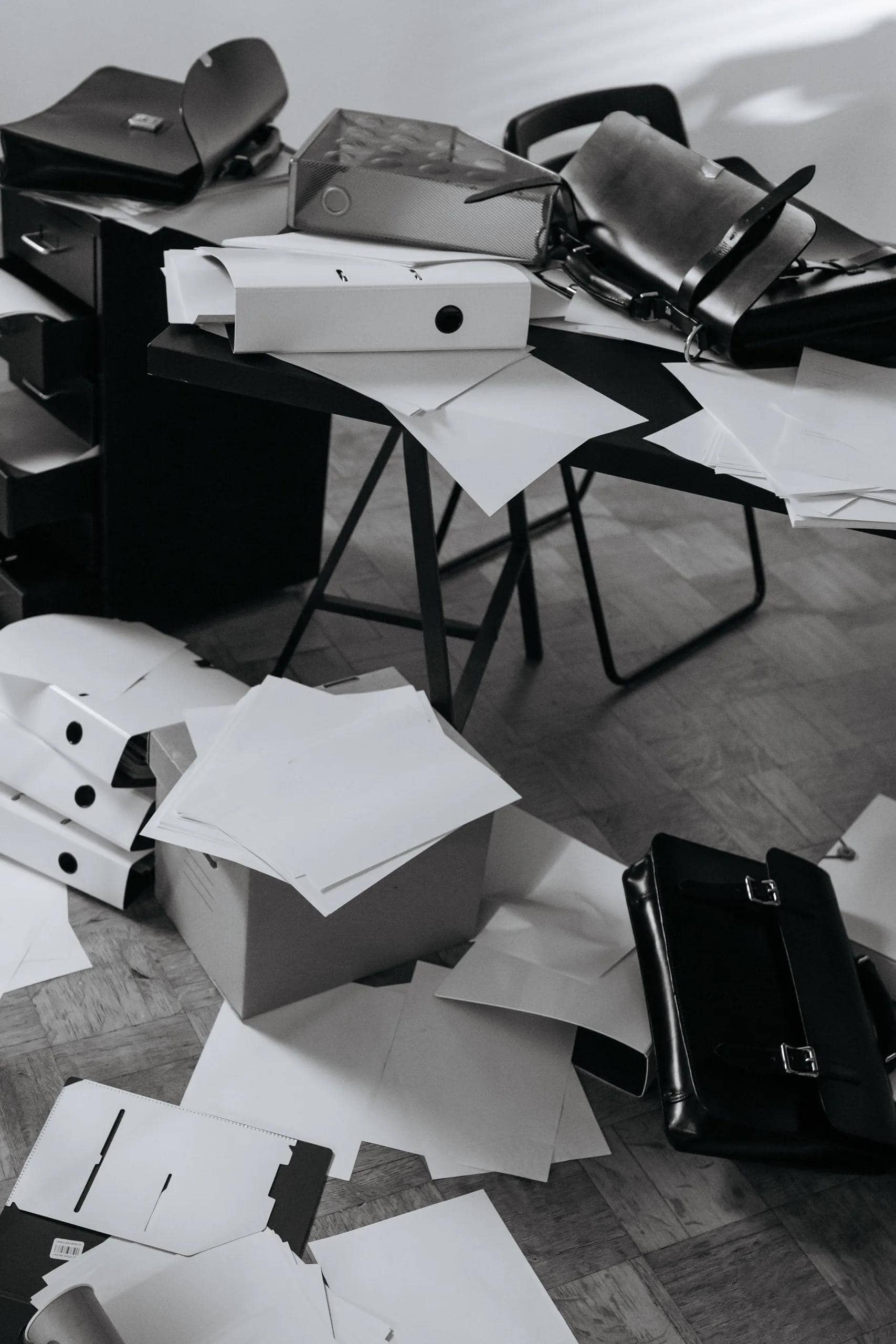
Before you apologize for the clutter on your dining table, consider this: new behavioural research suggests that strategic disorder might actually be the sign of a highly functional household.
If you open any mainstream lifestyle magazine or scroll through a social media feed dedicated to interior design, you will be met with a powerful, unspoken rule: a successful home is an empty one. Surfaces are clear, objects are concealed, and every room appears to be suspended in a state of permanent, immaculate readiness.
When our own homes fail to meet this minimalist standard—when keys pile up by the door, homework overtakes the dining table, or half-finished projects linger on the coffee table—it is easy to feel a sense of failure. We are told that mess is inherently stressful, a sign of laziness, or evidence of poor time management.
But a growing body of behavioural science is pushing back against the idea that a perfectly tidy home is always the optimal environment. According to new qualitative research published in the Journal of Business Research (new tab) , disorder is not simply the absence of order. In many cases, it is a dynamic, practical tool that helps a household function.
Instead of romanticizing messy rooms as a sign of creative genius—a popular cultural myth that a 2019 conceptual replication study (new tab) failed to reliably prove—scientists are asking a more grounded question: When does household mess obstruct everyday life, and when does it actually help a home work better?
The Science of 'Productive Disorder'
To understand how people actually use their spaces, a research team from the Auckland University of Technology in New Zealand, led by Jamal Abarashi, studied 22 multi-person households. The methodology was highly personal: participants were asked to photograph five spaces they considered messy and five they considered tidy, followed by in-depth photo-elicitation interviews lasting up to 95 minutes.
What the researchers discovered, and what Abarashi recently outlined in The Conversation (new tab) , is that tidiness is a highly subjective and fluid state. The study challenges the moral interpretation of untidiness as a personal failing. Instead, domestic order is described as an "emergent product" of relationships among family members, objects, spaces, and daily rhythms.
The researchers identified three distinct capacities of domestic arrangements, corresponding to three forms of useful disorder:
1. Transitional Disorder
Think of the bags, water bottles, and keys left in visible "drop zones" near the front door. While aesthetically messy, these objects are strategically placed. They support movement between work, school, and home, serving as vital visual reminders for the next day's activities. Packing them away into a closet out of sight would make the morning routine harder, not easier.
2. Functional Disorder
A kitchen counter or dining table might look completely untidy because it is simultaneously supporting eating, homework, paid remote work, and family administration. Removing everything after each micro-task just to maintain a "clean look" can make the space less efficient. In highly active households, leaving active projects out is a form of functional efficiency.
3. Relational Disorder
Sometimes, tolerating an imperfect arrangement supports care, harmony, or learning. For example, a parent might leave a child's jumper on a chair because placing it there represents a developmental milestone—progress from simply dropping it on the floor. Imposing strict order in this scenario could disrupt a learning process or cause unnecessary interpersonal tension.
To navigate these states, the New Zealand study observed households using three overlapping strategies: restoring objects to designated places, tolerating arrangements that remain useful, and concealing disorder (like sweeping everything into a miscellaneous drawer) when visible order matters more than complete reorganization. Importantly, these strategies coexist; restoring order is not presented as the only correct choice.
When Tolerated Mess Becomes “Symbolic Pollution”
If leaving things out can be productive, does that mean we should abandon organising altogether? Not quite. The beneficial interpretation of mess has a clear boundary.
A related 2026 study in the Journal of Marketing Management (new tab) found that minor disorder is often easily tolerated until it reaches a tipping point. When mess accumulates enough to obstruct routines, when nobody knows how long it will remain, or when it creates interpersonal tension, it transforms into what researchers call "symbolic pollution." At this stage, it erodes a sense of control.
This nuance is crucial because it harmonizes the new findings with decades of psychological research highlighting the negative impacts of clutter. An frequently cited 2009 study of dual-income spouses (new tab) found that women who described their homes using stressful, clutter-related language showed flatter daily cortisol slopes and worsening moods over the observation period. Similarly, a 2016 correlational analysis (new tab) , reinforced by subsequent research in 2021 (new tab) , linked excessive clutter to reduced subjective wellbeing and a diminished sense of psychological home.
The critical distinction lies in functionality and excess. A dining table holding today's active work project is functional disorder. A dining table buried under three years of unsorted mail, rendering it unusable for family meals, is obstructive clutter.
The Illusion of the Minimalist Ideal (and the Hidden Cost of Order)
Culturally, we seem to be recognizing the exhaustion of maintaining showroom-perfect homes. The IKEA Store & Organize Report 2026 (new tab) , a massive global survey of 31,488 people across 31 markets, found that 59% of respondents actually prefer a "lived-in" home to a minimalist one. The report also highlights our very human habits: 68% of households have a miscellaneous drawer or box for objects without permanent homes, and 82% retain possessions for sentimental reasons even when rarely used.
However, the same survey highlights a darker side to domestic disorder: 38% of people reported leaving things out in the hope that another person would deal with them. The kitchen countertop was identified as the hardest area to keep clutter-free by 24% of respondents, and the messy area most likely to cause an argument by 37%.
This brings us to a vital limitation of simply "accepting" mess: domestic order is deeply tied to unequal labor. According to 2024 survey data from the European Institute for Gender Equality (EIGE) (new tab) , 59% of women across the EU perform cooking, cleaning, or laundry every single day, compared with just 33% of men.
A household can label a mess as "functional," while distributing its costs unfairly. An arrangement that is highly convenient for one household member—like leaving hobby equipment scattered across the living room—can create invisible monitoring, planning, and visual stress for another. Therefore, any embrace of productive disorder must be negotiated collectively by everyone sharing the space.
Rethinking the Architecture of Everyday Life
What do these findings mean for the way we actually live? First, they suggest that we should evaluate disorder by its function rather than its appearance. Does a cluster of objects help an active routine, or does it prevent the space from being used?
We can also rethink how we design our homes. Instead of expecting every object to perpetually disappear behind flat cabinet doors, modern living spaces need better transition systems. This means integrating adaptable storage, open "drop zones" that look intentional, and furniture that preserves accessibility while allowing visible order to be restored quickly when needed.
Ultimately, a successful home is not necessarily one that is continuously tidy. It is a flexible ecosystem that can move between order and disorder naturally—without preventing essential activities, without unfairly shifting domestic labor, and without making its occupants feel overwhelmed. So, the next time you look at the pile of bags and keys by the front door, you might not need to sigh in frustration. You might just be looking at a family that knows exactly where they are going tomorrow.
Sources and Further Reading
- The upside of Mess: conceptualising (dis)order as a dynamic family resource (new tab) – Journal of Business Research (2026)
- The upside of untidiness: why a little mess can be good for your home (new tab) – The Conversation (2026)
- How mess becomes pollution: spatiotemporal and relational dynamics of domestic disorder (new tab) – Journal of Marketing Management (2026)
- IKEA Store & Organize Report 2026: Finding Meaning in the Mess (new tab) – IKEA / Ingka Group
- Gender Equality Index 2025: Sharper data for a changing world (new tab) – European Institute for Gender Equality
- No Place Like Home: Home Tours Correlate With Daily Patterns of Mood and Cortisol (new tab) – Personality and Social Psychology Bulletin (2009)
- The dark side of home: Assessing possession ‘clutter’ on subjective well-being (new tab) – Journal of Environmental Psychology (2016)
- Home and the extended-self: exploring associations between clutter and wellbeing (new tab) – Journal of Environmental Psychology (2021)
- Workspace Disorder Does Not Influence Creativity and Executive Functions (new tab) – Frontiers in Psychology (2019)
 SpotlessGiG