Svejest 42 Journal
The Light That Moves: Can Dappled Sunlight Make Indoor Life Less Stressful?
Most conversations about healthy indoor lighting focus on brightness and colour. New research suggests we may be ignoring a crucial element of well-being: the way natural light moves, shifts, and casts shadows.
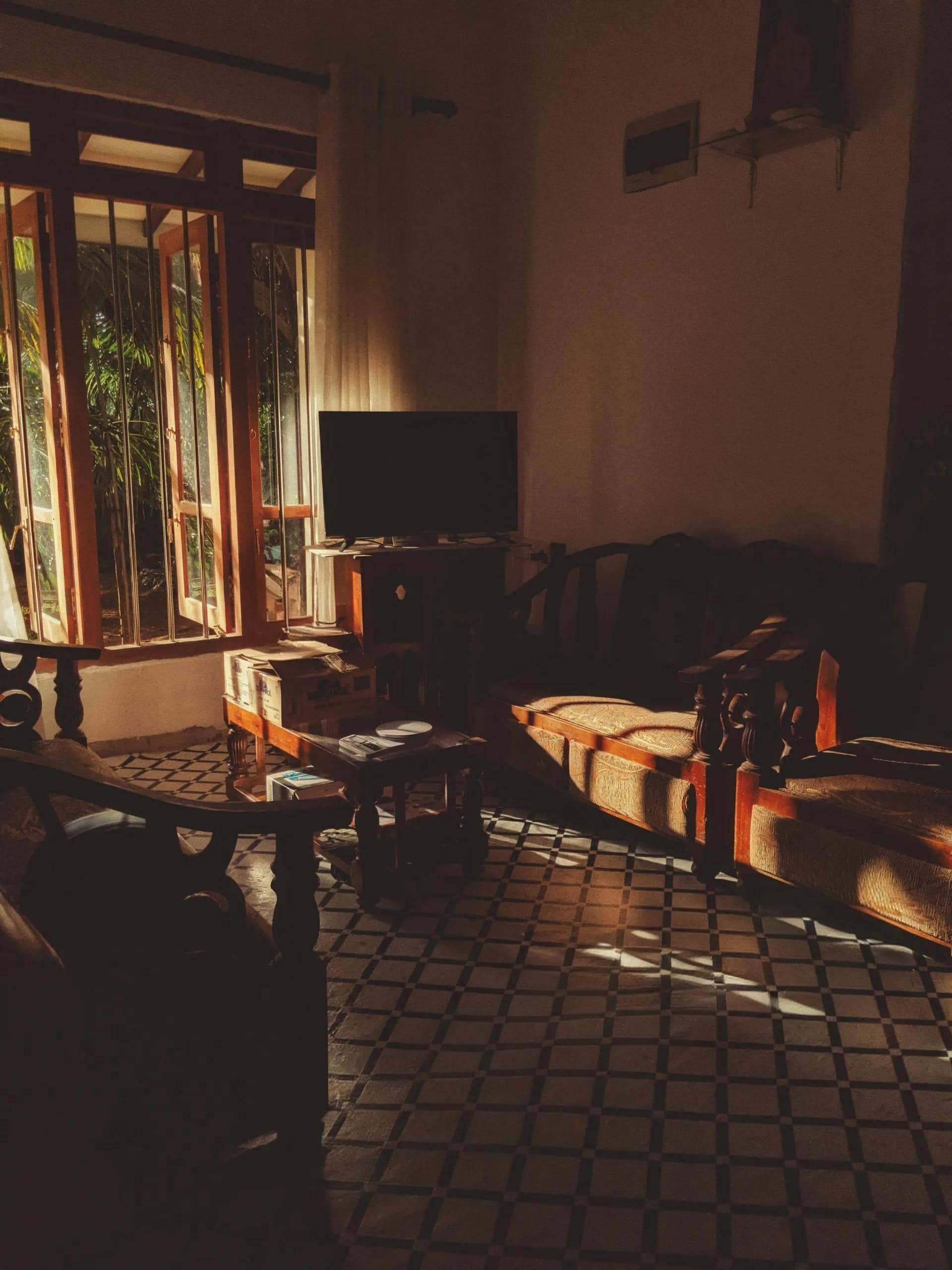
If you look around the room you are currently sitting in, chances are the lighting is remarkably static. Whether it pours through a clear pane of glass or beams from an LED fixture overhead, the illumination in modern homes and offices is usually designed to be uniform, constant, and efficient. We evaluate it by lux levels, colour temperature, and energy consumption. But if you were to step outside and stand under a canopy of trees, the light would be entirely different—fractured, textured, and constantly in motion.
According to an estimate cited in a European Parliament resolution (new tab) , modern populations spend approximately 90% of their time indoors. As we reconsider our homes and workplaces for well-being, climate adaptation, and the realities of hybrid work, the quality of our indoor environments has become a critical public health conversation. Now, an emerging body of research is shifting the design question from how much light a room receives to what that light does over time.
On November 2, 2026, Özge Karaman-Madan, a Human Technology Interaction researcher, defended her doctoral thesis, "The Nature of Light," at Eindhoven University of Technology (TU/e). Synthesized in a recent university publication (new tab) , her work frames daylight not merely as a biological time cue or a source of illumination, but as a rich visual and spatial experience. Specifically, her research asks a fascinating question: Does the movement and texture of sunlight—like the dappled light filtered through swaying leaves—influence stress differently from ordinary, uniform illumination?
The Promise and the Reality Check of Daylight
Before exploring moving light, it is essential to understand how daylight broadly affects us. A comprehensive systematic review (new tab) published in the Journal of Environmental Psychology in 2024—co-funded by the Dutch Ministry of Economic Affairs and Climate and lighting company Signify—examined the restorative effects of daylight indoors. Following strict PRISMA guidelines, the researchers analysed 33 articles covering 67 unique relationships between daylight factors and restorative outcomes.
The findings were promising, but they also serve as a vital reality check against simplistic wellness claims. Of the 67 examined relationships, 42% were positive, showing that natural daylight can support physiological or cognitive restoration. However, 49% of the findings were null, 6% were mixed, and 3% were negative.
Because the studies were too varied to pool into a single meta-analysis, the researchers urge caution: daylight is not a magic bullet that reliably eliminates stress in every context. Yet, where sunlight was beneficial, direct sunlight appeared more restorative than diffuse daylight alone—provided it did not cause visual discomfort. In fact, 67% of the relationships testing window orientation reported a restorative effect in spaces receiving direct sunlight compared to those receiving less or no direct sun.
When the Body Calms Down, But the Mind Doesn't Notice
If direct sunlight holds restorative potential, what happens when that light is textured and moving? To test this, Karaman-Madan and her team conducted a 73-person laboratory experiment (new tab) , published in Building and Environment.
Participants were exposed to either dynamic dappled light or a uniform-light control during a stressful task. The physiological results were intriguing: those exposed to the dynamic dappled light exhibited lower skin-conductance levels (a reliable marker of physiological arousal) during the high-stress period compared to the control group.
However, this physiological dampening did not align with conscious experience. Participants did not report feeling lower subjective stress, and heart-rate metrics did not reach statistical significance. They rated the dynamic pattern as more natural, engaging, and complex, but also more attention-grabbing and distracting than uniform light.
This presents a profound editorial and architectural question: Can a room affect bodily arousal without making people feel noticeably calmer? If an environment silently moderates physiological stress while technically distracting the occupant, is it a "healthy" space?
The Danger of "Fake" Nature
As smart home technology advances, it is tempting to imagine that we can simply project moving shadows onto our walls to simulate a walk in the woods. But the research explicitly warns against treating natural movement as an easily replicated commodity.
A subsequent 67-person experiment (new tab) tested a static abstract pattern, a pattern moving with natural motion (extracted from real dappled sunlight), and a pattern with non-natural motion. The results showed that natural motion produced better heart-rate-variability (HRV) recovery than non-natural motion—but only after statistical outliers were removed. Neither moving condition significantly outperformed the static control in stress recovery.
More importantly, participants rated both moving abstract patterns as more stressful and distracting than the static control. The non-natural movement was actively judged as less relaxing and less pleasant. The researchers caution that the HRV results might actually reflect an adverse bodily response to unnatural, artificial-looking motion, rather than proving that natural motion is inherently therapeutic.
This risk of "bad" motion is further illustrated by a small, non-peer-reviewed master's thesis project (new tab) at TU/e. While the 21-participant study failed to induce significant tense arousal and abandoned physiological data collection due to equipment problems, it yielded a compelling behavioural note: non-natural motion actually reduced participants' task accuracy. Unnatural movement in an indoor environment can easily cross the line from restorative to irritating.
Decomposing the Illusion
Why is our reaction to moving light so delicate? It appears we intuitively recognise the spatial fingerprints of nature. In a 59-person online experiment (new tab) involving 16 projected patterns, researchers manipulated movement, edge characteristics, luminance, and shape.
Every single manipulation away from the authentic characteristics of real dappled sunlight reduced the pattern's perceived restoration potential. Curiously, while perceived naturalness correlated strongly with restoration ratings, explicit recognition of the pattern as "natural" mediated only 8% of the condition's effect. This suggests a subtle, deeply ingrained human response: we may respond physiologically to natural visual structures without needing to consciously identify them as "nature."
Practical Implications for Modern Living
What does this mean for how we live, work, and design our homes? The findings suggest that future interiors might be evaluated not only by brightness but by shadow texture, movement, and occupant control.
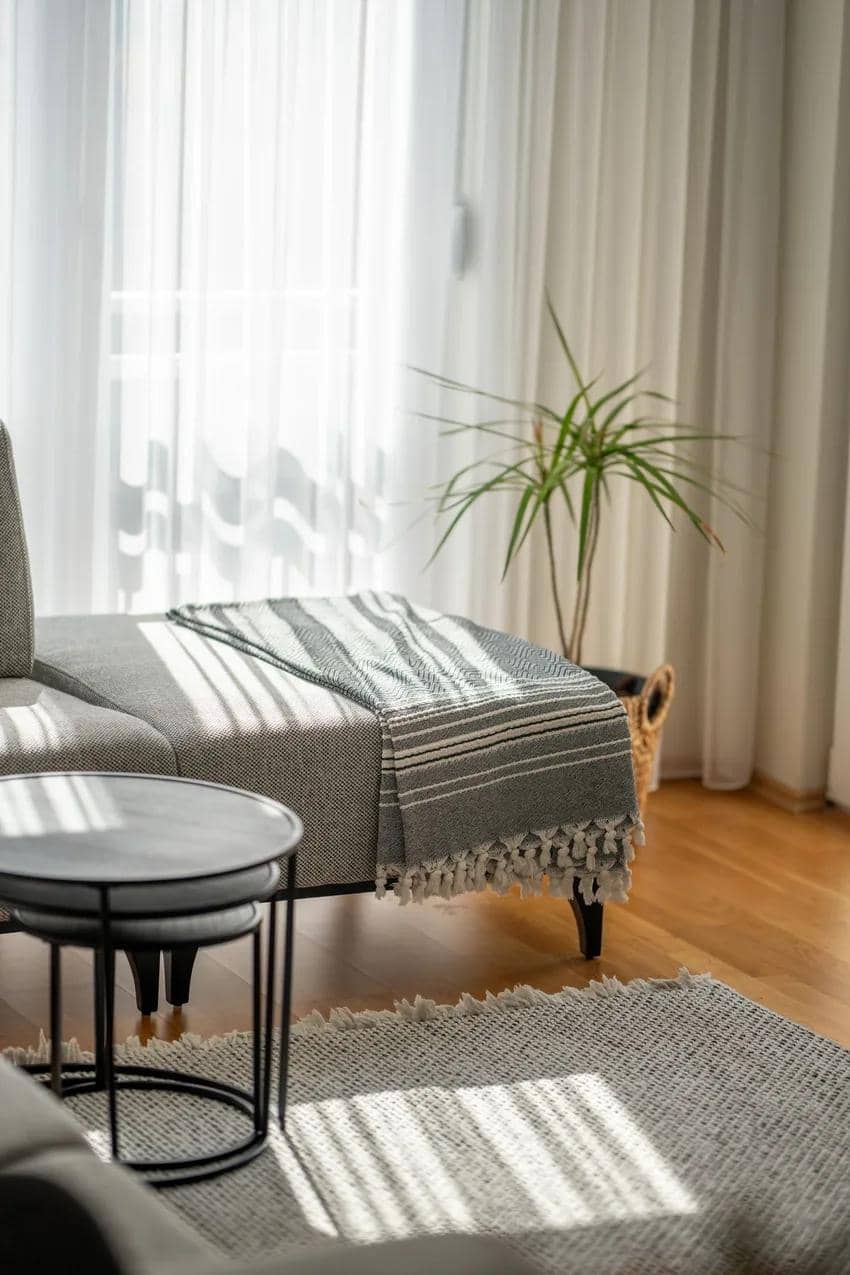
1. Look closely at existing light. You don't need to buy expensive, specialized lighting products. The most defensible immediate step is to notice how daylight already enters your home. Does a nearby tree cast shifting shadows in the late afternoon? Do balcony plants or sheer curtains create comfortable, gentle variation? Embracing these natural light plays might quietly support well-being.
2. Beware the glare. A sunny room is not automatically a better room. As the European standard EN 17037 (new tab) outlines, healthy daylighting is a delicate balance among illumination, views out, direct-sunlight exposure, and strict protection from glare. Direct sunlight is only promising when it doesn't cause visual or thermal discomfort. Adjustable blinds, exterior shading, and smart positioning of workspaces remain essential.
3. Approach artificial dynamism with caution. While future smart homes might integrate daylight-responsive systems that preserve useful natural variation, the current evidence suggests caution. A badly designed moving-light effect could easily become another distracting screen-like flicker rather than a calming biophilic intervention.
Ultimately, Özge Karaman-Madan's research invites us to stop viewing interior lighting as a mere utility. Sunlight is a dynamic, shifting texture that connects the indoor environment to the turning of the planet outside. While science is still untangling exactly how these moving shadows affect our nervous systems, the design takeaway is clear: a little bit of natural, moving complexity might be exactly what our static modern interiors need.
Sources and Further Reading
- The Role of Daylight in Creating Restorative Indoor Environments (new tab) — Eindhoven University of Technology
- Restorative Effects of Daylight in Indoor Environments: A Systematic Literature Review (new tab) — Journal of Environmental Psychology
- Light in Motion: Effects of Dynamic and Static Light Patterns from Nature on Subjective and Physiological Stress (new tab) — Building and Environment
- Natural Dynamics Without Nature? Effects of Motion Type in Light Patterns on Stress Recovery (new tab) — Journal of Environmental Psychology
- Decomposing the Naturalness of Dappled Sunlight (new tab) — IAPS Conference
- Investigating the Effects of Projected Dappled Light Patterns on Attention and Stress (new tab) — Eindhoven University of Technology (Master's Thesis)
- EN 17037:2018+A1:2021 – Daylight in Buildings (new tab) — Buildwise
- European Parliament Resolution on Maximising the Energy Efficiency Potential of the EU Building Stock (new tab) — EUR-Lex
 SpotlessGiG