Cleaning after a death is one of the most specialised and sensitive forms of environmental remediation. It sits at the intersection of occupational safety, infection control, legal regulations and respect for the grief of loved ones. Unlike standard home cleaning, it requires highly specialised knowledge.
Professionals in this field must treat all visible and potential contamination as infectious. They follow strict deep cleaning and disinfection processes, comply with regulations on bloodborne pathogens and hazardous waste, and document their work according to recognised international standards.
In this article, we will explore exactly what this process involves, the risks and why involving a certified cleaning company is critically important to restoring safe hygiene in the room.
What is specialist cleaning after a death?
The conceptual and practical scope of cleaning after a death varies considerably depending on the setting. In hospitals, this process includes both “care after death” to preserve the deceased person's dignity and immediate disinfection of the room. In homes, public spaces and workplaces, however, the situation is often much more complex.
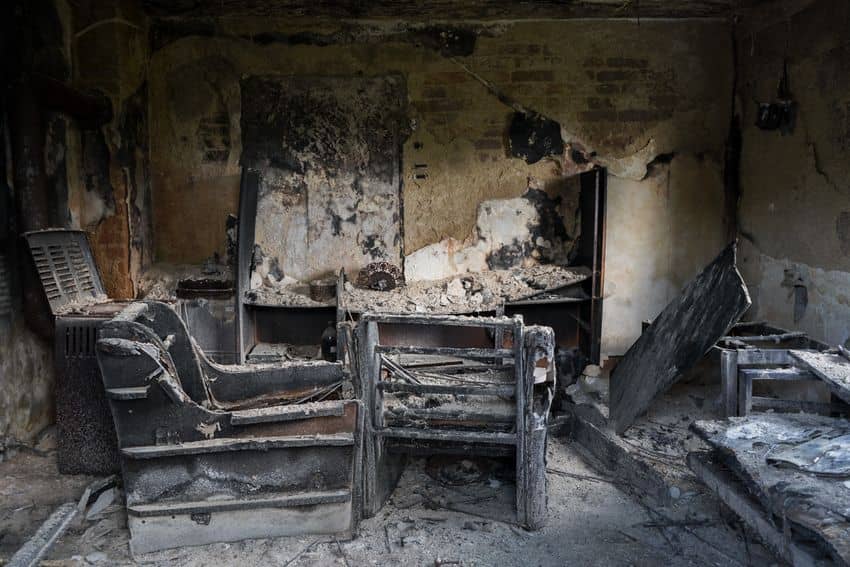
Cleaning a home after a traumatic incident, crime or a death not discovered promptly (an “unattended death”) requires extensive decontamination. The process goes far beyond routine cleaning and enters the field of biohazard remediation.
Main risks and biological hazards
The fundamental rule for this type of service, set out in safety standards (such as OSHA in the USA), is the principle of “universal precautions”. This means all human blood and other potentially infectious materials (OPIM) must be treated as carrying bloodborne pathogens.
The main risks include:
- Bloodborne viruses: Hepatitis B (HBV), hepatitis C (HCV) and HIV, which can be transmitted through contact with blood or specific bodily fluids.
- Resistant bacteria: Such as MRSA, which can survive on surfaces for long periods.
- Mould and fungi: In cases where a body has not been discovered for days or weeks, mould spores and dangerous gases from decomposition develop rapidly in warm, poorly ventilated surroundings.
Key decontamination standards and procedures
To ensure complete safety and excellent hygiene for the property's future occupants, professional teams follow strictly defined protocols based on guidance from global health and regulatory bodies (such as the CDC, NHS and ANSI/IICRC S540 standards).
A two-stage cleaning and disinfection process
One of the most common mistakes made by inexperienced people is attempting to apply disinfectant directly to biological contamination. According to Centers for Disease Control and Prevention (CDC) guidance, effective treatment requires a two-stage approach:
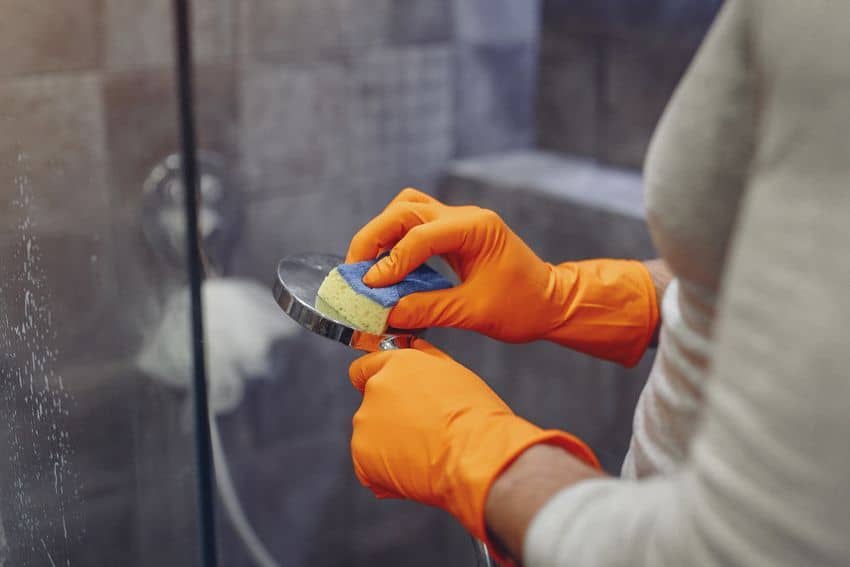
Deep cleaning (mechanical removal): The first step is removing visible contamination, organic materials and blood. Absorbent materials are used (then disposed of as hazardous waste), followed by cleaning with a neutral detergent and warm water. If this step is skipped, organic matter can deactivate the disinfectant and render it useless.
Intermediate- or high-level disinfection: Only after the surface has been cleaned is a specialist disinfectant applied (often chlorine-based, with a concentration of between 500 and 5,000 ppm available chlorine, depending on the scale). The product must remain wet on the surface for a specified time (usually around 10 minutes) to destroy all remaining microorganisms.
Personal protective equipment (PPE) and team protection
Workers undertaking this type of deep cleaning face a serious risk of infection. Using specialist personal protective equipment is therefore a non-negotiable requirement.
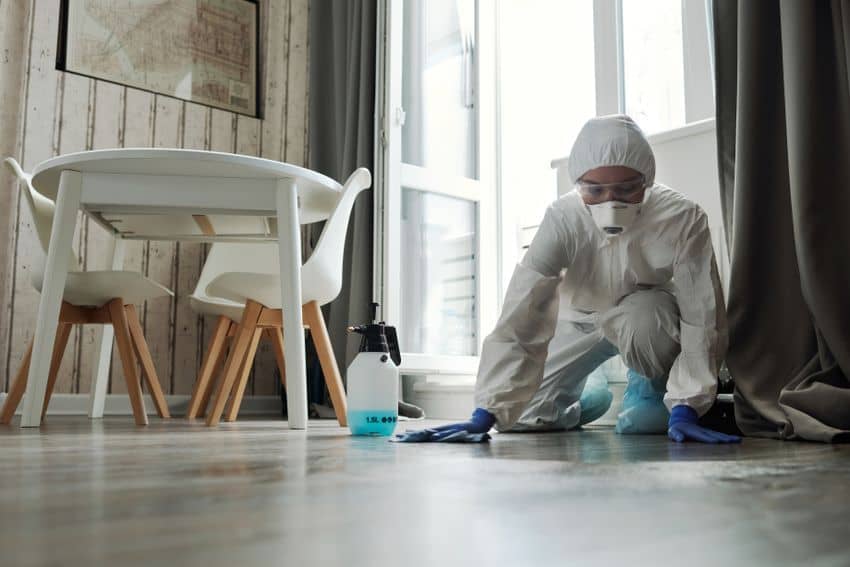
Teams use fluid-resistant protective suits, specialist gloves, eye protection (goggles or face shields) and respirator masks, particularly where pathogens may become airborne or strong odours and mould are present. Correctly putting on and removing this equipment is essential to prevent cross-contamination.
Specific challenges in domestic settings
Deaths discovered after a delay
When someone dies and the body remains undiscovered for a prolonged period, decomposition causes deep structural contamination. Fluids can penetrate floor coverings, reach the subfloor, soak into walls and even affect ventilation systems.
In these situations, standard cleaning frequency and conventional methods are entirely ineffective. Professional remediation requires:
- Removing and disposing of saturated porous materials (carpets, underlay and plasterboard).
- Treating structural elements with antimicrobial agents.
- Using odour-control technologies such as ozone generators, thermal fogging and encapsulating sealants.
The smell of decomposition is extremely persistent and penetrates textiles and furniture. Several visits from the specialist team are often needed to ensure complete odour neutralisation and restore indoor air quality.
Managing biohazardous waste
All materials that have been in contact with blood or bodily fluids (including paper towels, sponges and workers' protective suits) cannot simply be thrown into a general rubbish bin.
According to the ANSI/IICRC S540 industry standard for crime and trauma scene cleaning, this waste is classified as infectious. It must be packaged in special leak-proof containers and bags, clearly marked with biohazard symbols, and handed over to licensed companies for the transport and disposal of medical and hazardous waste.
Legal regulations and industry standards
To understand the seriousness of this type of service, it is important to mention that cleaning after a death is strictly regulated internationally:
- OSHA (USA): The Bloodborne Pathogens Standard requires employers to provide exposure control plans, hepatitis B vaccinations for employees and strict working practices. HAZWOPER requirements (hazardous waste operations) also apply to large-scale incidents.
- ANSI/IICRC S540: This is the leading standard describing procedures and precautions for trauma scene cleaning, defining inspection methods, biocide selection and verification of cleanliness.
- NHS and CDC: Health institutions provide precise medical protocols on which fluids are hazardous and what disinfectant concentrations ensure environmental safety.
Investing in professional cleaning after a traumatic event is an investment in health. Attempting to bypass these standards can create lasting risks for the property's occupants.
Frequently asked questions (FAQ)
1. Can I clean up myself after a death in my home? It is not recommended. Even apparently small blood or bodily fluid stains can contain dangerous bloodborne pathogens such as hepatitis B, hepatitis C or HIV. Standard household cleaning products are not strong enough to ensure complete disinfection. A lack of specialist protective equipment also exposes your health to enormous risk.
2. How long does the cleaning and decontamination process take? The time depends on the severity of the situation. For less serious incidents in a single room, the process may be completed in a day. For deaths discovered after a delay, where there is structural contamination and a strong odour, cleaning, removing contaminated materials and subsequent deodorisation may take several days and require follow-up visits.
3. How is the persistent smell of decomposition removed? The smell cannot be removed through ordinary ventilation or air fresheners. Professionals remove the source itself (often embedded in floors and walls), then use specialist equipment. Ozone generators or thermal foggers are most commonly used to break down odour molecules at a microscopic level.
4. Does property insurance cover the cost of this cleaning? In many cases, standard property insurance policies cover professional biohazard remediation costs because it is considered restoration of property damage. It is advisable to contact your insurer as soon as possible. Professional companies provide full documentation of the work performed, which is needed for the insurance claim.
Conclusion
Cleaning after a death is more than a matter of appearance: it is a high-risk process requiring specialist knowledge, equipment and rigorous discipline. From the strict two-stage cleaning and disinfection method to correct biological waste disposal, every step follows international safety protocols.
For bereaved families and property owners, hiring a certified professional company offers uncompromising hygiene, a restored safe environment and much-needed peace of mind at an exceptionally difficult emotional time. By trusting experts, you ensure that the home becomes a safe, clean place to live once again.