Medical clinics occupy a specific and exceptionally important niche in the healthcare system. They provide outpatient care ranging from routine consultations to minor surgical procedures, wound treatment and diagnostic tests. Although these premises may not appear as high-risk as intensive care units in large hospitals, they share many of the same environmental contamination challenges. The reason is simple — large numbers of patients pass through them, often using small treatment rooms, shared waiting areas and toilets.
Healthcare-associated infections (HCAIs) are not confined to large hospitals. They can also easily be acquired in outpatient settings through contact with contaminated surfaces or medical equipment. This is where uncompromising hygiene comes in.
Hiring a professional cleaning company specialising in healthcare facilities offers a combination of benefits — infection prevention, regulatory compliance, operational efficiency and an impeccable reputation. In this article, we will explore why standard cleaning methods are insufficient and how a specialist approach transforms safety in your clinic.
Why is standard commercial cleaning insufficient?
The difference between general office cleaning and specialist medical cleaning is fundamental. Standard cleaning focuses primarily on appearance and the removal of visible dirt. Visual cleanliness is its main indicator of quality.
Healthcare hygiene, on the other hand, requires both visual and technical (microbiological) cleanliness. The aim is not simply to make rooms look good, but to remove organic material and reduce microbial load to levels that minimise the risk of transmitting dangerous pathogens (such as C. difficile, MRSA and various respiratory viruses). This requires specialist knowledge of product contact times, the correct working sequence and the choice of approved disinfectants — knowledge that ordinary cleaners rarely have.
Key benefits of specialist medical cleaning
1. A proven reduction in infection risk
According to international meta-analyses, introducing evidence-based environmental cleaning and disinfection protocols reduces hospital-acquired infections by approximately 25%. Pathogens can survive for long periods on dry surfaces, particularly those touched frequently — door handles, chair backs, keyboards, examination couches and medical equipment.
Professional teams know how to break the chain of transmission. They apply systematic routines that remove the biological film protecting microorganisms and use disinfectants at the correct concentration to destroy them.
2. Economic benefits and protection against penalties
Every infection acquired during treatment is costly. Data show that infection-related complications (such as surgical site or bloodstream infections) can add tens of thousands of dollars to a single patient's treatment costs. Even if the clinic does not directly bear all these hospital costs, it suffers indirect losses through legal claims, reputational damage and regulatory penalties.
Investing in professional cleaning is a form of risk management. Preventing even a small number of infections pays back the cost of the cleaning service many times over.
3. Operational efficiency and a focus on patients
When you entrust hygiene to a specialist company, you free your medical staff from the burden of managing complex cleaning logistics. Doctors, nurses and administrators can focus entirely on patient care, knowing that routine and deep cleaning, equipment decontamination and environmental monitoring are in expert hands.
4. Compliance with strict regulatory standards
Leading international organisations such as the WHO (World Health Organization) and CDC (Centers for Disease Control and Prevention) have strict frameworks for maintaining hygiene in medical settings. They require cleaning to be based on risk assessment, documented and audited.
Professional cleaning companies provide the management systems and audit trails needed to demonstrate to health inspectors that your clinic meets the highest national and international standards.
Best practices in professional clinic cleaning
To be effective, clinic cleaning cannot be haphazard. It must follow strict protocols that professional teams have thoroughly mastered.
Working from “clean to dirty” and “high to low”
This is a golden rule in medical cleaning. The process always starts in the cleanest areas and moves towards the most contaminated, preventing bacteria from spreading. Cleaning also proceeds from higher surfaces (such as shelves and light fittings) to lower ones, with the floor cleaned last. This ensures that falling dust or microorganisms do not contaminate areas already cleaned.
Wiping technique
Professionals use an “S-shaped movement” when wiping large, flat surfaces. They start at the furthest point and slightly overlap their strokes without going over the same area twice. Cloths (usually microfibre) are folded several times to use all their clean faces, then replaced. “Double dipping” (returning a dirty cloth to a bucket of clean solution) is strictly prohibited.
The right cleaning frequency according to risk
Not every area of a clinic carries the same risk. Professional companies develop specific schedules:
- High-touch surfaces: Door handles, light switches, waiting room chairs and toilets. These require cleaning and disinfection at least once a day, and often several times a day.
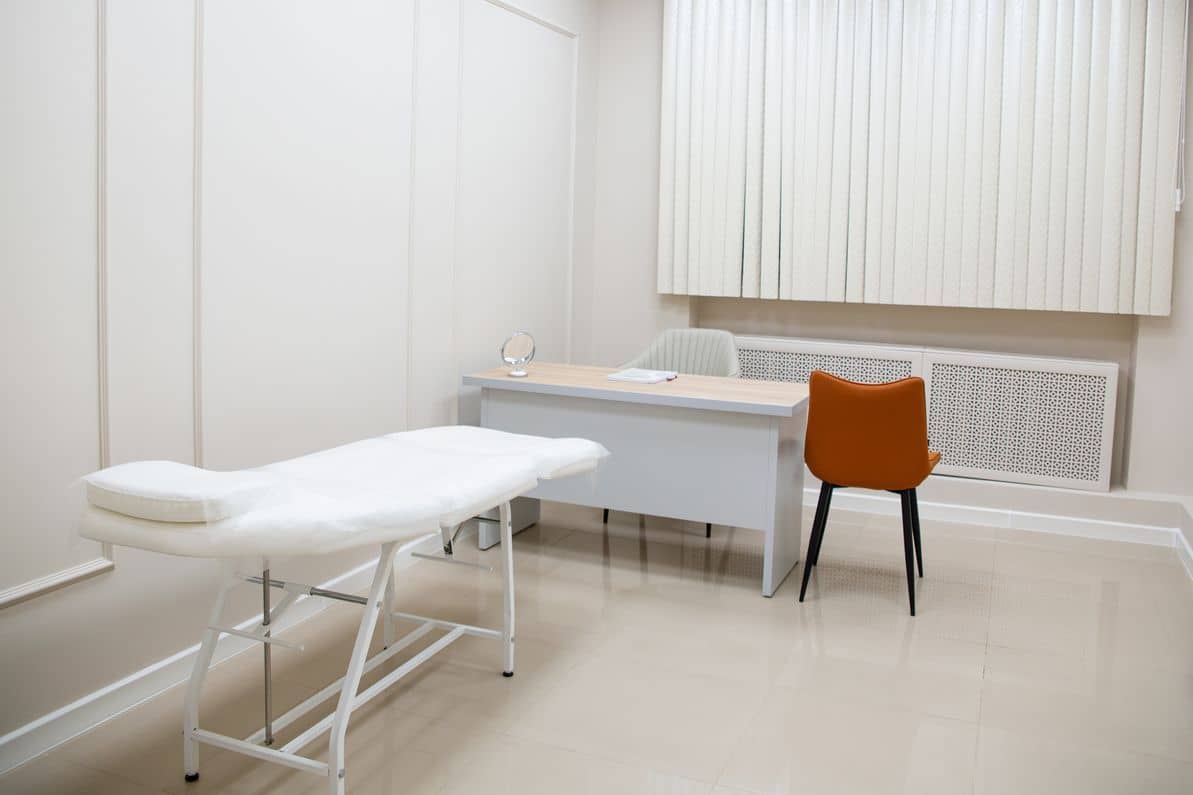
- Procedure and treatment rooms: Require cleaning of high-touch surfaces and examination couches after every patient.
- Low-touch surfaces: Floors, walls and ceilings can be treated less frequently unless visibly soiled.
Managing biological spills and emergencies
Blood or bodily fluid spills require an immediate response. The protocol calls for careful removal and cleaning with a neutral detergent first, followed by a higher-level disinfectant (for example, a chlorine-based product). All used materials are disposed of as hazardous infectious waste, and staff must use appropriate personal protective equipment (PPE).
The difference between routine and deep (terminal) cleaning
A key part of hygiene management is distinguishing between cleaning types:
- Routine cleaning: Carried out daily while the clinic is operating. It focuses on removing visible dirt from high-touch areas and floors, ensuring a safe, welcoming environment for patients.
- Deep (terminal) cleaning: Carried out at the end of the working day, after a series of procedures or after a patient with an infectious disease has left the room. This exceptionally detailed process covers absolutely every surface, including low-touch ones, complete equipment decontamination and disposal of all single-use supplies.
Protecting staff and patients: the role of the right products
Using ordinary household products in medical settings is unacceptable. Professional companies work only with regulator-approved disinfectants that have proven activity against specific pathogens (including viruses such as SARS-CoV-2).
What matters is not only which product is used, but also how it is applied. Every disinfectant has a specific contact time — the period for which the surface must remain wet to destroy microorganisms (usually between 1 and 5 minutes). Trained staff follow these instructions strictly, protecting patients from infections and themselves from chemical burns or respiratory problems through correct use of PPE (gloves, masks and safety goggles).
Frequently asked questions (FAQ)
1. What is the difference between standard and professional medical cleaning? Standard cleaning aims for visual cleanliness and appearance. Medical cleaning applies strict protocols (such as working from clean to dirty) and hospital-grade disinfectants to reduce microbial load and prevent infections.
2. How often should clinic waiting rooms and reception areas be cleaned? Waiting rooms should be cleaned at least daily, with a focus on floors. High-touch surfaces, however (door handles, armrests, reception desks and card payment terminals), require disinfection several times a day, particularly during seasons with high levels of illness.
3. What is “terminal” or deep cleaning? This is an exceptionally detailed clean of the entire consulting or treatment room, carried out at the end of the working day or after a procedure involving a high-risk patient. It includes disinfecting absolutely all surfaces (high- and low-touch), all medical equipment and disposing of all used single-use materials.
4. Can cleaning staff themselves spread infection? Yes, if staff are untrained. Using the same cloth in different rooms or dipping a dirty cloth into clean solution leads to cross-contamination. Professional companies prevent this through strict rules: frequent cloth changes (different colours for different areas), personal hand hygiene and a one-way workflow.
Conclusion
Integrating specialist professional cleaning services into your medical clinic is far more than simply keeping the building presentable. It is a strategic partnership that ensures patient safety, protects the medical team and builds trust in your practice.
With structured programmes based on risk analysis, strict quality control and expert disinfection knowledge, professional cleaning companies transform hygiene from an administrative burden into a competitive advantage. By investing in the right cleaning and the right cleaning frequency, you not only meet regulatory requirements but also provide the best possible environment for your patients' health.