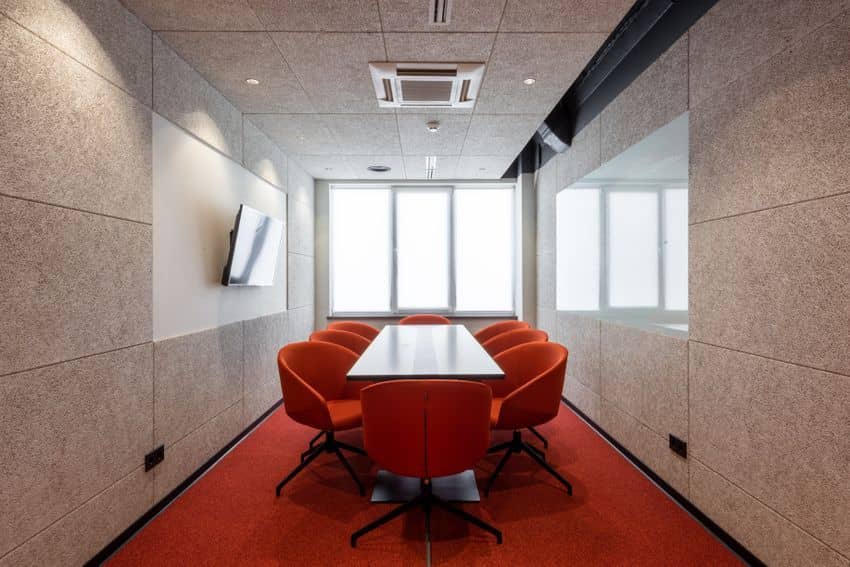
Modern office buildings increasingly rely on textile floor coverings. Carpets offer excellent sound insulation and comfort, reduce glare and create a welcoming working environment. But in areas with heavy footfall — such as reception areas, main corridors, spaces outside lifts and open-plan offices — carpets face enormous wear.
Maintaining office carpets in these key areas involves much more than appearance. It sits at the intersection of company asset management, employee health and workplace safety. According to leading international institutions and organisations such as the Carpet and Rug Institute (CRI), IICRC and the US Environmental Protection Agency (EPA), a modern approach requires a structured, multilayered maintenance programme rather than haphazard or occasional cleaning.
A well-maintained carpet improves indoor air quality, reduces the risk of slipping and extends the flooring's life. Conversely, neglected rugs and carpets become veritable 'reservoirs' of dust, allergens and pollutants, contributing to so-called Sick Building Syndrome and increasing the risk of accidents.
In this guide, we will examine best practices for professional cleaning and hygiene, based on international standards, to help you develop an effective strategy for your office.
Why do high-traffic areas require a special approach?
High-traffic areas are spaces through which large numbers of people pass every day. This creates specific challenges not encountered in lightly used conference rooms or private offices.
Carpet as a 'reservoir' of dust and pollutants
From an indoor air quality (IAQ) perspective, carpet has the unique ability to capture and retain dust, dirt, pollen, mould spores and even pesticide residues brought in on shoes. According to the EPA, a carpet that is kept clean acts as an effective filter, retaining particles until they are removed through thorough vacuuming.
However, if maintenance is inadequate, this 'filter' becomes overloaded. Every step in a high-traffic area sends accumulated fine dust particles back into the air, potentially causing breathing problems, allergies and headaches among employees.
The problem of moisture and microorganisms
Around main entrances, particularly during rainy and snowy months, carpets are exposed to substantial amounts of moisture. Health experts are clear: if a carpet stays damp for more than 24 hours, it becomes an ideal environment for mould, bacteria and unpleasant odours. Managing moisture and ensuring rapid drying after wet cleaning are critical to the health of office occupants.
The four pillars of an effective maintenance programme
International standards, such as CRI 204 and ANSI/IICRC S100, set out a clear framework for textile floor care. A successful strategy for deep cleaning and everyday hygiene consists of four main elements.
1. Preventive maintenance: stop dirt at the entrance
The best cleaning strategy starts outside the building. Prevention is the cheapest and most effective way to preserve carpet.
- Barrier mats: Use quality mats outside and inside entrances. They should be long enough for people to take several steps on them, scraping off and absorbing moisture and coarse dirt from their shoes.
- Daily mat cleaning: The mats themselves must be vacuumed and cleaned every day; otherwise, they will begin transferring dirt onto the carpets inside.
- Hard floor maintenance: Regular cleaning of pavements outside and hard flooring in the lobby reduces the amount of dirt that can be transferred onto carpet.
2. Routine vacuuming: the foundation of good hygiene
Vacuuming is the most important step in routine maintenance. According to industry association ISSA, up to 95% of dry dirt in carpet can be removed by effective vacuuming.
- Frequency: In high-traffic areas, such as corridors and entrances, vacuuming must take place daily.
- Equipment: Use professional vacuum cleaners with HEPA filters, or equipment certified to CRI standards, to ensure fine dust is not released back into the air.
- Technique: A quick pass is not enough. Movements should be slow and methodical, with passes in crossing directions to extract dirt from all sides of the fibres.
3. Interim cleaning to maintain appearance
Interim cleaning sits between daily vacuuming and a thorough deep clean. Its aim is to refresh areas where worn 'traffic lanes' develop before dirt becomes deeply embedded.
- Low-moisture methods, such as encapsulation, are most commonly used, allowing the carpet to dry exceptionally quickly — sometimes in less than an hour.
- In heavily used areas, this type of cleaning should take place every 4 to 6 weeks. It preserves the office's professional appearance and prevents irreversible damage to the fibres.
4. Restorative deep cleaning
Even with perfect daily maintenance, sticky residues, grease and deeply embedded dirt accumulate in carpet over time. This is where professional deep cleaning comes in, most commonly through hot water extraction, also known as machine carpet cleaning.
Here is what the correct process looks like according to industry standards:
Pre-vacuuming: Essential removal of dry dirt.
Applying cleaning solution (pre-spray): A special solution is applied and left to work for 10–15 minutes to break down grease.
Extraction: Hot water is injected while powerful suction simultaneously removes water and dirt.
Grooming the fibres: Improves appearance and speeds up drying.
Accelerated drying: Using specialist air movers and the building's air conditioning system. The carpet must dry completely within 2 to 8 hours, and certainly within 24 hours, to avoid the risk of mould.
For high-traffic office areas, this deep cleaning should be scheduled every 3 to 6 months.
Safety, standards and workplace health
Professional cleaning must not create new risks for employees. Occupational safety organisations, such as the UK HSE, pay particular attention to slips and trips during cleaning.
- Managing wet areas: When carpet is being cleaned, the transition from damp carpet to an adjacent hard floor, such as tiles or laminate, becomes extremely slippery. Warning signs are essential, but physical barriers are even more effective.
- Cables and trips: Cleaning equipment creates a trip hazard. Work should be carried out in sections or at times when few staff are present.
- Ventilation and VOCs: Installing new carpets or using strong cleaning products releases volatile organic compounds (VOCs). Spaces should be well ventilated for at least 24 to 72 hours after the procedure to ensure excellent air quality.
The most common office carpet maintenance mistakes
Even well-intentioned companies often make mistakes that ruin expensive flooring:
- Relying on a single annual clean: Many managers neglect interim cleaning and rely on one annual 'spring clean'. In high-traffic areas, this is far from sufficient — dirt has already irreversibly damaged the fibres.
- Responding incorrectly to stains: When coffee spills, the first instinct is to rub the stain vigorously. This frays the carpet and pushes the liquid deeper. The correct approach is gentle blotting or dabbing with a dry white cloth.
- Leaving the carpet wet for too long: Inexpert machine cleaning with poor-quality equipment leaves the carpet soaked. This leads to damp smells, bacterial growth and rapid resoiling, as wet fibres attract dirt like a magnet.
- Overfilled vacuum cleaner bags: If the bag is more than one-third full, suction power drops dramatically and filtration deteriorates.
Frequently asked questions (FAQ)
1. How often should office carpets in busy areas be deep cleaned? For high-traffic areas, such as main corridors, reception areas and lobbies, the industry standard recommends deep cleaning by hot water extraction every 3 to 6 months. Daily vacuuming, however, remains absolutely essential.
2. Why does carpet sometimes smell bad after cleaning? Unpleasant odours usually result from excessive wetting and slow drying. According to health experts, if carpet remains damp for more than 24 hours, bacteria and mould begin growing in its backing. Professional companies use powerful extractors and air movers to ensure complete drying within 2 to 8 hours.
3. What should we do immediately after spilling a liquid, such as coffee or tea? Act immediately. Take a clean, dry white cloth or paper towel and blot the liquid by pressing down. Never rub, as this creates friction that damages the fibre structure and 'seals' the stain deep inside. Then contact professionals for localised stain treatment.
4. Can dirty carpet cause health problems for employees? Yes. Neglected carpet becomes a reservoir for fine dust, allergens, pollen and spores. Walking releases these particles into the air, potentially causing eye and throat irritation, allergic reactions and headaches. This is a key factor in the development of Sick Building Syndrome. Regular cleaning literally improves office air quality.
Conclusion
Maintaining office carpets in high-traffic areas cannot be left to chance. It requires an integrated strategy combining entrance barrier systems, uncompromising daily vacuuming, regular interim refreshing and timely deep cleaning.
Investing in professional cleaning based on international standards, such as CRI and IICRC, does more than preserve your office's appearance. It protects the warranty on expensive flooring, reduces the risk of workplace accidents such as slips and trips, and above all provides a healthy, productive and safe environment for your employees. If you want your office carpets to look immaculate and last, choose a certified cleaning company that understands the science behind proper maintenance.